
Apple M6 and M5 Ultra: Apple’s Next Big Leap in Performance and AI
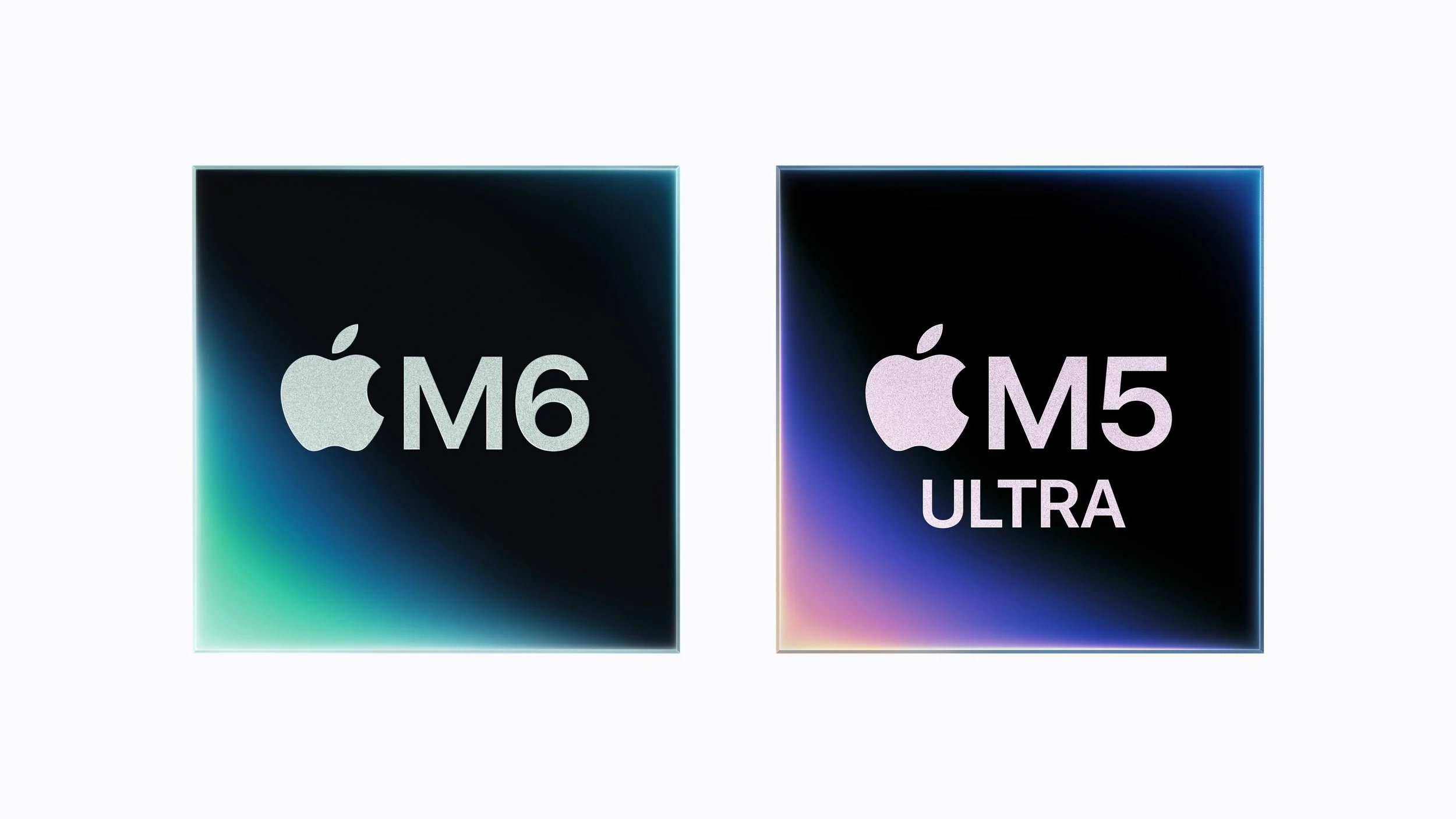
Apple has unveiled its next generation of Apple silicon, introducing the all-new M6 and M5 Ultra chips. While the M6 is designed to bring a major performance and efficiency boost to everyday Macs, the M5 Ultra is aimed squarely at professionals who need enormous amounts of processing power for demanding creative and AI workloads.
Apple says both chips represent a significant step forward in CPU, GPU and AI performance, with the M6 becoming the company’s first 2-nanometre chip, while the M5 Ultra introduces Apple’s first quad-die architecture in an M-series chip.
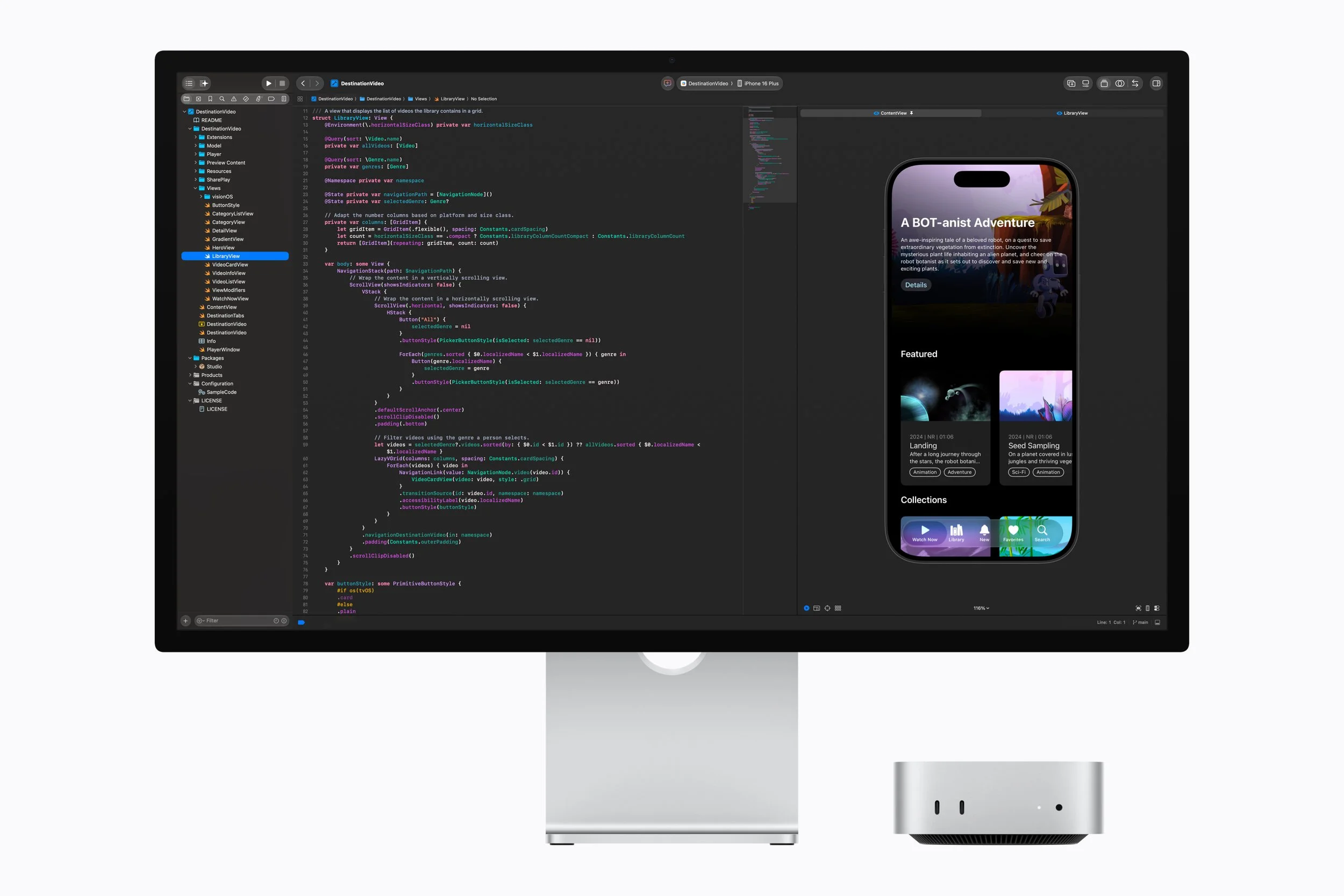
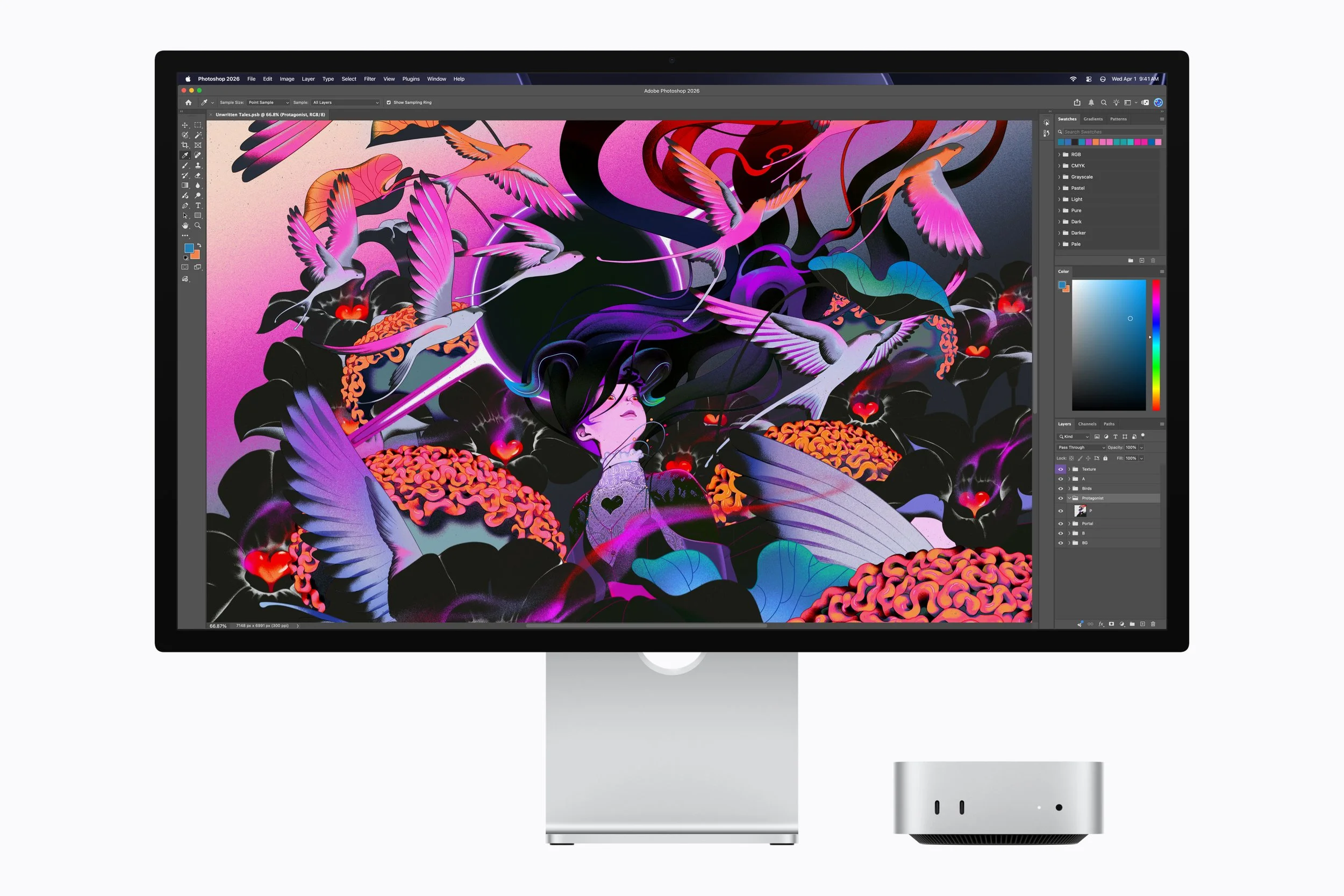
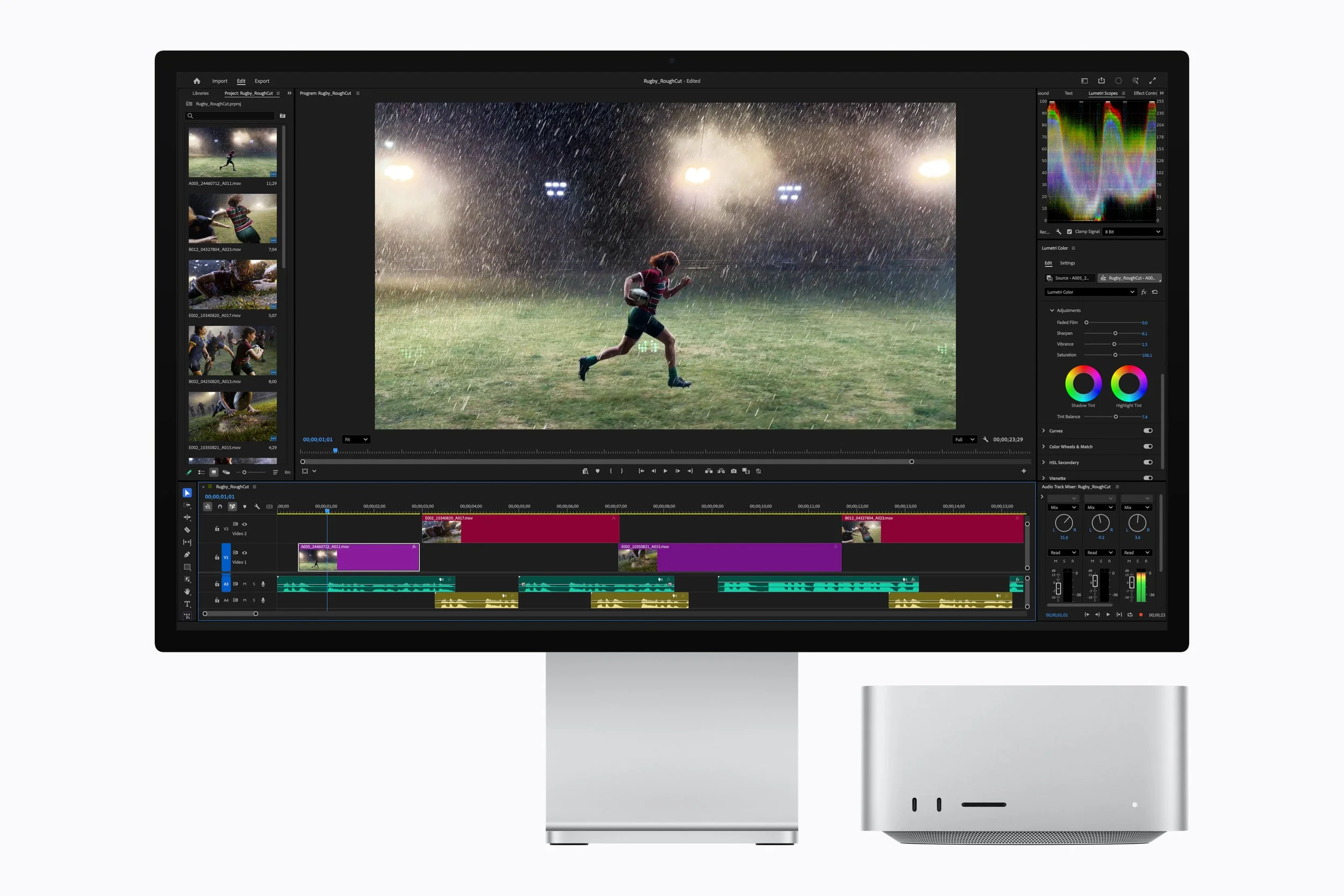
The M6 debuts in the new Mac mini, while the M5 Ultra powers the latest Mac Studio.
So, what exactly makes these new Apple silicon chips so interesting — and what does all this extra performance actually mean for everyday users?

Apple M6: Smaller Process, Bigger Performance
The M6 is arguably the more interesting of the two chips for mainstream Mac users.
Built using a cutting-edge 2nm manufacturing process, the M6 packs more transistors into a smaller area. In simple terms, that allows Apple to increase performance while also improving power efficiency.
The result is a chip designed to handle everything from everyday productivity and web browsing to photo editing, coding, gaming and increasingly demanding AI workloads.
Apple has given the M6 a completely redesigned 12-core CPU, consisting of:
2 super cores
4 performance cores
6 efficiency cores
That's two more CPU cores than the M5.
Apple claims the M6 delivers up to 1.2x faster multithreaded performance than M5 and up to 2.4x the multithreaded performance of M1. Apple also describes the M6 as delivering the world's fastest single-threaded CPU performance.
What does that mean in the real world?
For the average Mac user, the improvements should translate into faster application launches, smoother multitasking and quicker completion of demanding tasks.
If you're editing photos, compiling code, managing large libraries of files or using AI-powered applications, the additional CPU performance could become particularly noticeable.
For less demanding tasks such as browsing the web, watching YouTube or working on documents, the biggest benefit may simply be having plenty of performance headroom for years to come.
M6 Doubles Down on AI
One of the biggest stories surrounding the M6 is its focus on artificial intelligence.
The chip features a Dual 16-core Neural Engine, giving it two Neural Engines working together for on-device AI workloads.
Apple says this provides up to 2x the peak compute performance of previous generations, with Apple's system frameworks able to utilise both Neural Engines simultaneously.
That could have significant implications as more applications begin using AI locally rather than relying entirely on cloud-based processing.
For users, that can mean faster AI-powered features, quicker responses and potentially greater privacy because more processing can happen directly on the Mac.
The M6 also includes Neural Accelerators within its GPU cores, further increasing its ability to process AI workloads.
A 12-Core GPU With Built-In Neural Accelerators
The M6 doesn't just improve CPU performance.
Apple has equipped the chip with a 12-core GPU, up from 10 cores in the M5, with each GPU core featuring a Neural Accelerator.
According to Apple, this provides almost a 30% increase in peak GPU compute for AI compared with M5, while delivering more than eight times the AI GPU compute of M1.
For everyday users, that could benefit everything from AI image generation and video editing to graphics-heavy applications and games.
The M6 also includes updated graphics technologies such as:
Improved shader core architecture
Dynamic Caching
Hardware-accelerated ray tracing
50% higher geometry rates
The combination should help deliver faster rendering, improved graphical detail and higher frame rates in supported games.
Faster Unified Memory
The M6 supports up to 32GB of unified memory and provides up to 170GB/s of memory bandwidth.
That's a 10% increase over M5 and 2.5 times the bandwidth of M1.
For non-technical users, memory bandwidth essentially describes how quickly the processor can move data between the CPU, GPU and memory.
More bandwidth becomes particularly useful when you're working with large files, high-resolution video, complex graphics or AI models.
The unified memory architecture also means the CPU and GPU can share the same pool of memory rather than having separate memory pools.
Apple M5 Ultra: The Monster of the M-Series
While the M6 is about delivering an impressive balance of performance and efficiency, the M5 Ultra is in an entirely different league.
Apple calls the M5 Ultra its most powerful chip ever, and it's designed for professional users working with extremely demanding workloads.
Think:
3D rendering
Professional visual effects
High-resolution video production
Scientific computing
Data analysis
Software development
Local AI model development
Large language models
Complex simulations
And Apple has made some serious changes under the hood.
Apple’s First Quad-Die M-Series Chip
One of the biggest technological changes in the M5 Ultra is its architecture.
Apple is using its next-generation UltraFusion technology to connect two dual-die M5 Max chips together.
The result is a quad-die architecture, marking the first time Apple has used four dies in an M-series system-on-chip.
Apple says UltraFusion provides more than 4.4TB/s of inter-die bandwidth, with connection density increasing by more than six times.
The important part is that the four dies behave like a single unified processor rather than four separate chips.
For users, that means Apple can scale its silicon to an enormous level without abandoning the unified architecture that has become one of the defining features of Apple silicon.
Up to 36 CPU Cores
The M5 Ultra can be configured with up to 36 CPU cores, consisting of:
12 super cores
24 performance cores
Apple says this provides up to 1.25x higher single-threaded performance and up to 1.3x higher multithreaded performance compared with M3 Ultra.
That's the sort of performance that becomes useful when you're dealing with workloads that can actually take advantage of huge amounts of parallel processing.
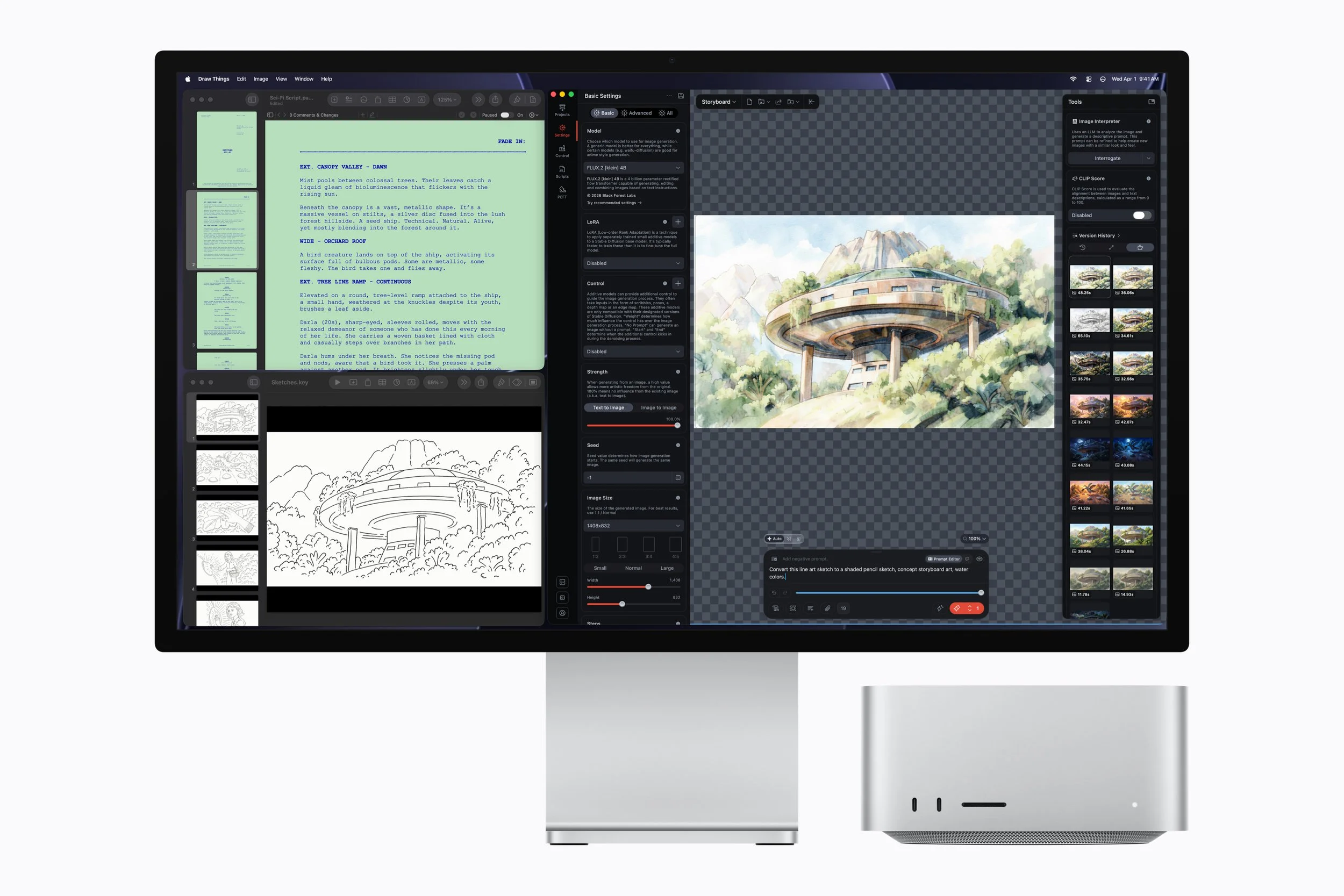
For example, a professional video editor could work with multiple high-resolution video streams and complex effects, while a 3D artist could render complex scenes more quickly.
Up to 80 GPU Cores
The M5 Ultra takes GPU performance to another level with up to 80 GPU cores.
And just like the M6, Apple has integrated Neural Accelerators into its GPU cores.
Apple claims the M5 Ultra offers up to 4.5x the peak GPU AI compute of M3 Ultra and more than six times that of M1 Ultra.
Graphics performance has also received a significant upgrade, with the M5 Ultra featuring:
Second-generation Dynamic Caching
Hardware-accelerated mesh shading
Third-generation ray tracing
Updated shader architecture
Apple claims graphics performance can be up to 40% faster than M3 Ultra.
For professional creatives, that could mean faster rendering and smoother workflows when working with complex 3D environments, visual effects and high-resolution content.
The M5 Ultra Is Built for Local AI
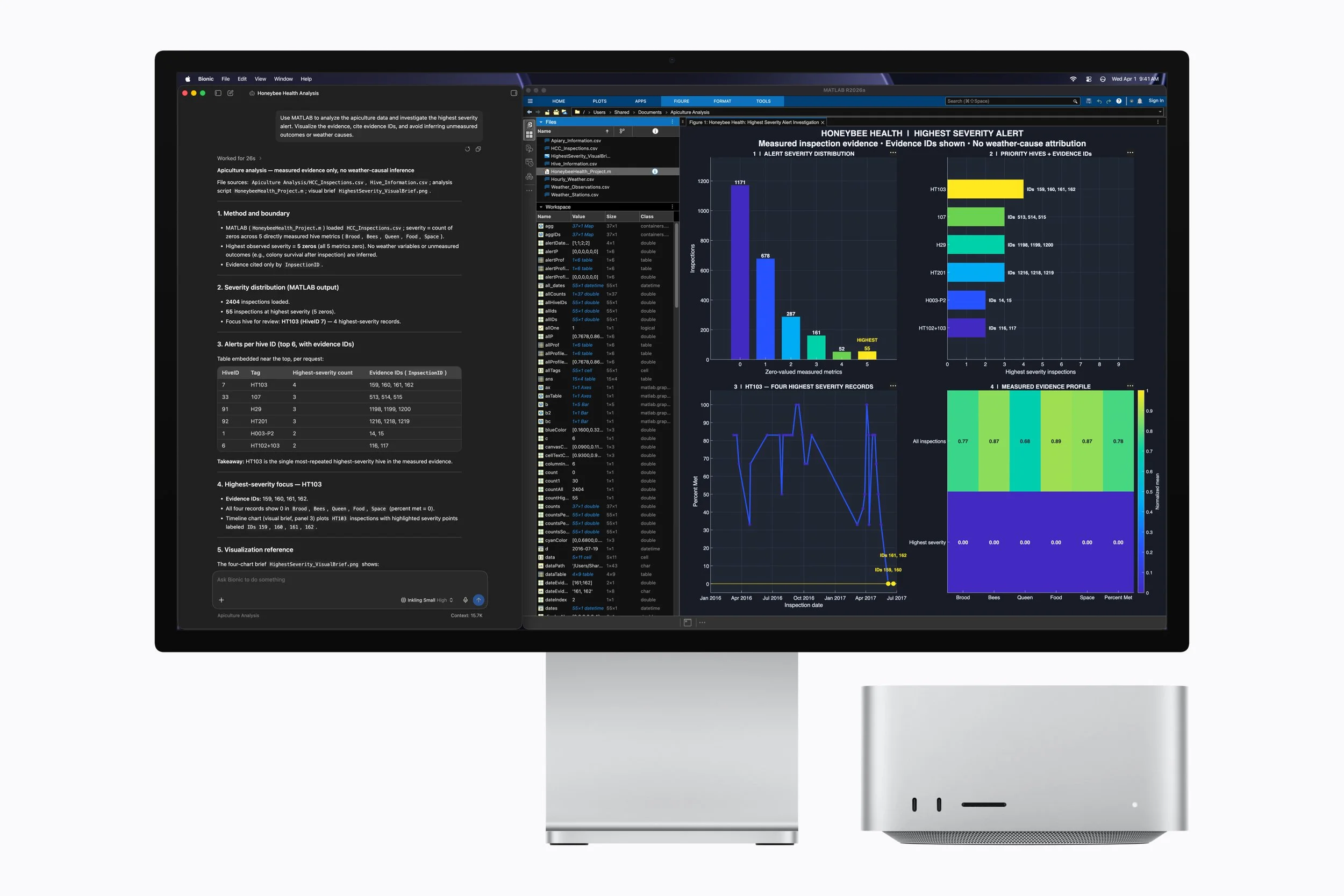
Perhaps the most impressive aspect of the M5 Ultra is its potential for running AI models locally.
The chip includes a 32-core Neural Engine, while its GPU also features Neural Accelerators.
But the real game changer could be its memory configuration.
The M5 Ultra supports up to 512GB of unified memory and delivers a staggering 1.2TB/s of memory bandwidth.
That's 50% more memory bandwidth than M3 Ultra.
Why does this matter?
Large AI models require huge amounts of memory. Having hundreds of gigabytes of fast unified memory means developers and AI researchers can potentially run enormous language models locally without having to send data to a cloud service.
Apple says the M5 Ultra can run LLMs containing hundreds of billions of parameters entirely on device.
For AI developers, researchers and businesses working with sensitive information, that could be a very big deal.
A Serious Upgrade for Video Professionals
Apple has also enhanced the M5 Ultra's media capabilities.
The chip includes dedicated hardware for:
H.264
HEVC
AV1 decoding
ProRes encoding
ProRes decoding
There are also four dedicated ProRes encode and decode engines.
For video professionals, this means the M5 Ultra is designed to handle extremely demanding editing workflows without relying solely on the CPU and GPU.
For someone editing 4K, 6K or 8K footage, the benefits could be substantial.
What Do M6 and M5 Ultra Mean for Consumers?
Here's where things get interesting.
Most people don't need an M5 Ultra.
If your typical Mac workload consists of browsing the web, Microsoft Office, email, streaming, photo management and occasional video editing, even Apple's lower-end silicon is already extremely capable.
The M6 is much more relevant to mainstream users.
It offers a combination of performance, efficiency and AI processing that should make the next generation of Macs even more capable without requiring users to buy a high-end workstation.
The M5 Ultra, meanwhile, is targeted at people who actually need workstation-class performance.
If you're editing feature-length films, producing complex visual effects, developing large AI models or working with massive scientific datasets, the enormous memory capacity and bandwidth could justify the investment.
Developers Get a Huge AI Boost
Apple is also giving developers the tools to take advantage of all this new hardware.
Frameworks including Core AI, Core ML, Metal and Xcode can access the CPU, GPU and Neural Engine capabilities of the new chips.
Developers can use Apple's Foundation Models, App Intents and their own AI models to create applications capable of running AI workloads locally.
That could eventually have a bigger impact on consumers than the raw benchmark numbers.
As developers take advantage of Apple's new hardware, we could see more applications using AI features directly on the Mac — without constantly sending information to the cloud.
The Bigger Picture: Apple Silicon Is Becoming an AI Platform
The M6 and M5 Ultra aren't simply faster versions of Apple's previous chips.
They demonstrate where Apple believes the future of personal computing is heading.
The emphasis is increasingly on on-device AI.
Instead of relying entirely on remote servers, increasingly capable Macs can process AI models locally using a combination of CPU, GPU, Neural Engine and unified memory.
That offers several potential advantages:
Speed: Local processing can reduce the need to send information to remote servers.
Privacy: Sensitive data can potentially remain on your device.
Reliability: Some AI features can work without a constant internet connection.
Efficiency: Apple's specialised hardware can process AI workloads without consuming the power that a traditional CPU-only approach might require.
The M5 Ultra takes this concept to an extreme, with enough memory and bandwidth to run enormous AI models locally.
Final Thoughts
Apple's new M6 and M5 Ultra chips represent two very different approaches to the future of Mac computing.
The M6 is perhaps the more important chip for the average consumer. Its 2nm manufacturing process, 12-core CPU, 12-core GPU, Dual 16-core Neural Engine and faster memory bandwidth make it a significant step forward for everyday Macs.
The M5 Ultra, meanwhile, is Apple showing just how far its Apple silicon architecture can scale.
With up to 36 CPU cores, 80 GPU cores, 512GB of unified memory and 1.2TB/s of memory bandwidth, the M5 Ultra is aimed at a relatively small group of professionals — but for those users, it could be an incredibly powerful workstation platform.
And perhaps the biggest story isn't CPU performance or GPU performance at all.
It's AI.
Both chips are designed around the idea that future Macs won't simply run AI applications — they'll increasingly process AI workloads locally.
For everyday users, that could mean smarter and faster Mac experiences. For developers and professionals, it could mean running increasingly sophisticated AI models directly on their desktops.
Apple silicon has already changed the Mac. With M6 and M5 Ultra, Apple appears to be taking the next major step toward making the Mac a serious on-device AI powerhouse.
What do you think of Apple's new M6 and M5 Ultra chips? Would you consider upgrading to a Mac powered by the new silicon? Let us know in the comments.